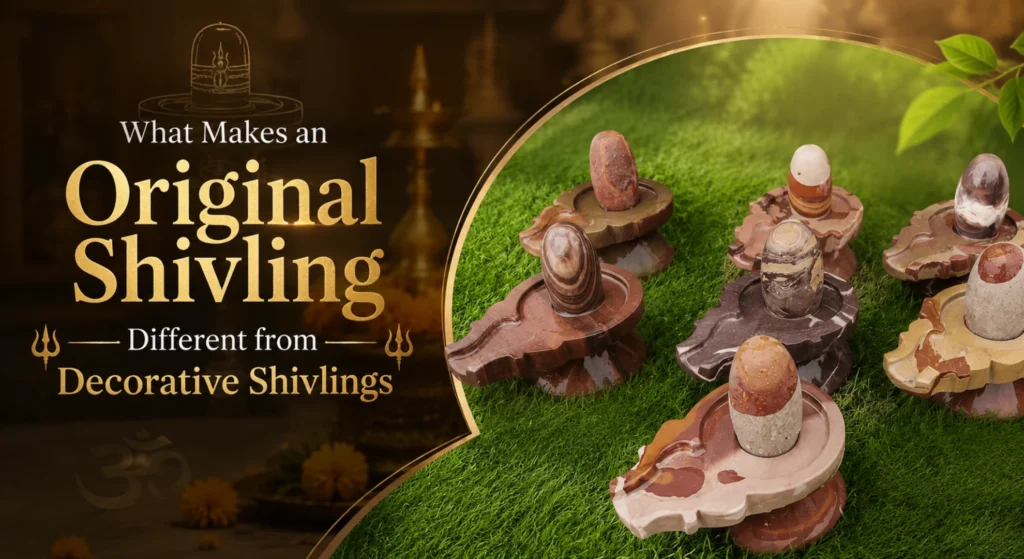
Introduction to Original and Decorative Shivlings
The Shivling holds deep spiritual and religious importance in Hindu tradition. Devotees worship it as a sacred symbol of Lord Shiva, divine consciousness, and cosmic balance. Over time, different types of Shivlings have become available in the market. Some are naturally formed and traditionally used for worship, while others are created mainly for decoration and artistic display. Because of this variety, many devotees often want to understand the difference between an authentic Shivling and a decorative one.
The topic of original vs decorative shivling is important because spiritual traditions place great value on authenticity, natural formation, and symbolic meaning. An original Shivling, especially a naturally formed Narmadeshwar Shivling, is believed to carry spiritual energy and sacred significance. Decorative Shivlings, on the other hand, are often designed for visual appeal rather than traditional spiritual practices. Understanding these differences helps devotees choose a Shivling according to their spiritual beliefs and worship needs.
What Is an Original Shivling?
An original Shivling is generally a naturally formed or traditionally crafted Shivling that devotees use for worship and spiritual practices. Among the most respected forms is the Narmadeshwar Shivling, which forms naturally in the sacred Narmada River over thousands of years through the continuous movement of water.
Devotees believe an original Shivling:
- Carries natural spiritual energy
- Represents purity and divine consciousness
- Holds traditional religious significance
- Supports meditation and spiritual focus
The original vs decorative shivling comparison begins with understanding that authentic Shivlings are associated with spiritual devotion rather than appearance alone. Ancient traditions describe naturally formed Shivlings as spiritually complete and naturally energized because nature itself shapes them over long periods of time.
What Is a Decorative Shivling?
Decorative Shivlings are usually created for artistic or ornamental purposes. Manufacturers often make them using artificial materials, machine carving, colorful designs, or decorative patterns to enhance visual appeal. These Shivlings may include gemstones, metallic finishes, or elaborate artistic details.
Decorative Shivlings are commonly used:
- As decorative items in homes or offices
- For gifting purposes
- As artistic spiritual symbols
However, many traditional devotees believe decorative Shivlings do not carry the same spiritual authenticity as naturally formed or traditionally worshipped Shivlings. Although decorative pieces may still inspire devotion, they are generally not viewed with the same religious importance as authentic Shivlings.
Natural Formation vs Artificial Design
One of the biggest differences in the original vs decorative shivling comparison is the formation process. Original Narmadeshwar Shivlings form naturally in the sacred river through continuous natural erosion and water movement. This process creates smooth shapes, balanced curves, and natural textures that devotees associate with divine energy.
Decorative Shivlings, however, are usually:
- Carved manually or machine-made
- Designed for visual perfection
- Polished heavily for decorative appeal
- Modified with artificial artistic elements
As a result, decorative Shivlings often appear more uniform and visually dramatic, while original Shivlings maintain natural imperfections and organic beauty that reflect their authentic origin.
Spiritual Importance of Original Shivlings
Traditional Hindu beliefs place strong emphasis on the spiritual value of naturally formed Shivlings. Devotees believe authentic Shivlings absorb sacred vibrations during their natural formation process, especially when they originate from spiritually significant places like the Narmada River.
The original vs decorative shivling discussion becomes important because original Shivlings are associated with:
- Spiritual discipline and devotion
- Meditation and emotional balance
- Positive spiritual energy
- Traditional Hindu worship practices
Many devotees feel a deeper spiritual connection when worshipping an authentic Shivling because they believe it represents divine energy in its purest natural form.
For spiritual importance insights, read:
https://shriramaynarmadeshwar.com/why-original-shivling-holds-greater-spiritual-importance-in-hindu-worship/
Differences in Surface Texture and Structure
Original Shivlings usually have naturally smooth textures created by years of river movement. Their surfaces may contain natural mineral patterns, subtle variations, and balanced curves that make every Shivling unique.
Authentic Shivlings often show:
- Natural texture variations
- Smooth but organic surfaces
- Balanced oval shapes
- Unique mineral markings
Decorative Shivlings may have:
- Artificial engraving or carving
- Bright colors or excessive polish
- Symmetrical machine-made designs
- Decorative additions for visual appeal
Therefore, careful observation of texture and structure often helps devotees identify authenticity more clearly.
Role of Authenticity in Worship Practices
Authenticity holds great importance in Hindu worship traditions because devotees believe sacred objects should maintain spiritual purity and traditional significance. Many people prefer authentic Shivlings for home worship because they feel naturally sacred objects create a more peaceful and spiritually uplifting environment.
The original vs decorative shivling distinction matters in worship because devotees believe original Shivlings:
- Encourage deeper concentration during prayer
- Support spiritual mindfulness and discipline
- Maintain stronger traditional symbolism
In contrast, decorative Shivlings are often appreciated more for artistic beauty than spiritual authenticity.
Why Decorative Shivlings Remain Popular
Although traditional worship emphasizes authentic Shivlings, decorative Shivlings remain popular because many people appreciate their artistic appearance and symbolic value. Decorative pieces often suit modern interiors and can still inspire spiritual thoughts and devotion.
People may choose decorative Shivlings because:
- They match home décor styles
- They are visually attractive
- They serve as symbolic spiritual gifts
However, devotees seeking traditional worship experiences usually prefer naturally formed Shivlings because of their spiritual and religious significance.
How to Choose the Right Shivling for Worship
Choosing between an original and decorative Shivling depends on personal beliefs, spiritual goals, and intended use. Devotees interested in traditional worship and meditation often prefer naturally formed Shivlings because of their sacred significance and authenticity.
When selecting a Shivling:
- Observe natural textures and patterns carefully
- Avoid excessive artificial decoration if seeking authenticity
- Choose trusted spiritual sellers
- Decide whether the purpose is worship or decoration
You can explore authentic Shivlings here:
https://shriramaynarmadeshwar.com/#product
Visit the official website:
https://shriramaynarmadeshwar.com/
For authenticity guidance, read:
https://shriramaynarmadeshwar.com/signs-of-an-original-narmadeshwar-shivling-vs-artificial-shivling/
Why Original Shivlings Continue to Hold Greater Spiritual Value
Even in modern times, authentic Shivlings continue to remain highly respected because they represent purity, devotion, and natural spiritual energy. Devotees often feel emotionally connected to naturally sacred objects because they reflect ancient Hindu traditions and spiritual values.
The continued importance of the original vs decorative shivling comparison reflects:
- Respect for traditional worship practices
- Desire for authentic spiritual experiences
- Appreciation for naturally sacred objects
- Faith in spiritual symbolism and purity
As a result, original Shivlings remain central to many devotional practices and spiritual lifestyles across generations.
FAQs
1. What is the main difference between original and decorative Shivlings?
Original Shivlings are naturally formed or traditionally worshipped, while decorative Shivlings are mainly designed for visual appeal.
2. Why are original Shivlings considered spiritually important?
Devotees believe naturally formed Shivlings carry divine energy and spiritual purity.
3. Can decorative Shivlings be used for worship?
Some people use them devotionally, but traditional worship usually prefers authentic Shivlings.
4. How can I identify an original Shivling?
Look for natural texture, balanced shape, organic markings, and authentic stone quality.
5. Why do devotees prefer Narmadeshwar Shivling?
It forms naturally in the sacred Narmada River and is considered spiritually energized.
6. Where can I buy authentic Narmadeshwar Shivling?
You can visit:
https://shriramaynarmadeshwar.com/