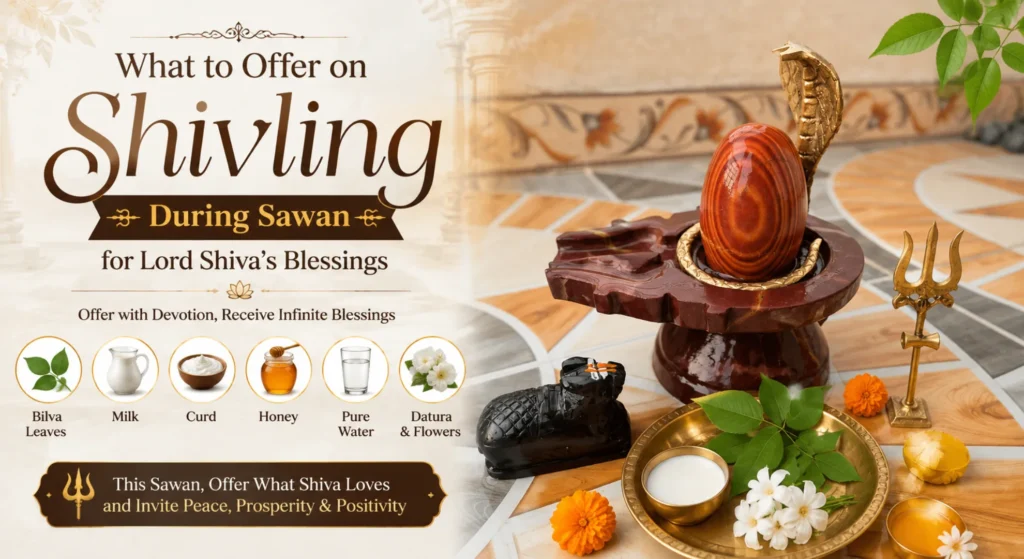
The holy month of Sawan is one of the most important periods of the year for devotees of Lord Shiva. During this sacred month, devotees observe fasts, visit Shiva temples, perform Abhishek, chant “Om Namah Shivaya,” and offer different sacred items to the Shivling. Among these practices, choosing the right offerings on Shivling during Sawan is an important part of daily worship.
Many devotees believe that Lord Shiva is pleased by simple and sincere offerings made with devotion. Water, Bilva leaves, milk, flowers, and other traditional items are commonly used during Sawan Puja. However, devotees often have questions about which offerings are considered important, how they should be offered, and whether every item needs to be used during daily worship.
This guide explains the most commonly used offerings during Sawan, their traditional significance, and a simple method for performing Shivling Puja at home with devotion and respect.
Why Are Offerings Important During Sawan?
Offerings are an important part of Hindu worship because they represent devotion, gratitude, surrender, and respect toward the deity. When devotees offer something to Lord Shiva, the purpose is not simply to present an object but to express their faith and willingness to dedicate themselves to spiritual practice.
Sawan provides a special opportunity to develop this habit because devotees often worship Lord Shiva more regularly during the month. Daily Abhishek and offerings can become a peaceful morning routine that encourages concentration, discipline, and spiritual reflection.
The most important factor is the intention behind the offering. A simple offering made with sincere devotion can be more meaningful than an elaborate ritual performed without attention.
1. Clean Water: The Most Important Offering
Clean water is one of the most common and sacred offerings made to the Shivling. Jal Abhishek is performed throughout Sawan, particularly on Mondays, when devotees gather in temples and homes to worship Lord Shiva.
Devotees gently pour clean water over the Shivling while chanting “Om Namah Shivaya.” Water represents purity, simplicity, and surrender, making it an ideal offering for daily worship.
If you are unable to perform an elaborate Abhishek every day, offering clean water with devotion is a simple way to maintain your Shiva Puja routine throughout Sawan.
2. Bilva Leaves: A Traditional Shiva Offering
Bilva, also known as Bel leaves, holds a special place in Lord Shiva worship. Fresh Bilva leaves are traditionally offered to the Shivling after Jal Abhishek. Many devotees consider them among the most auspicious offerings for Mahadev.
When offering Bilva leaves, devotees should choose fresh and clean leaves and place them respectfully on the Shivling while praying. The offering is traditionally associated with devotion, purity, and spiritual growth.
During Sawan, Bilva leaves are especially popular because devotees perform Shiva Puja more frequently and often include them in their daily rituals.
3. Milk: A Popular Abhishek Offering
Milk is another well-known offering used during Shivling Abhishek. Many devotees offer milk to Lord Shiva during Sawan, particularly on Sawan Somwar and other special days.
Milk is traditionally associated with purity and nourishment. If milk is used for Abhishek, it is advisable to gently rinse the Shivling afterward with clean water to remove any residue and maintain the cleanliness of the sacred stone.
Milk is not compulsory for daily worship. Devotees who prefer a simple routine can perform Jal Abhishek with clean water alone.
4. Panchamrit: A Traditional Abhishek
Panchamrit is traditionally prepared using five ingredients, commonly milk, curd, honey, ghee, and sugar. It is used in various Hindu rituals and is also offered during special Shivling Abhishek.
Many devotees perform Panchamrit Abhishek during Sawan Somwar, festivals, or other significant occasions. After the offering, the Shivling can be gently washed with clean water.
The exact ingredients and method may vary according to family traditions, regional practices, and the specific Puja being performed.
5. Flowers for Lord Shiva
Fresh flowers are another traditional offering during Sawan Shivling Puja. Flowers represent beauty, devotion, gratitude, and the offering of one’s pure intentions to the divine.
Devotees can use fresh flowers according to their family traditions and local customs. They should be clean and respectfully placed near or on the Shivling as part of the worship.
The purpose of offering flowers is not decoration alone. It is a simple way of expressing love and reverence toward Lord Shiva.
6. Sandalwood Paste
Sandalwood paste is commonly used during traditional Shiva Puja. Its soothing fragrance and association with purity make it a popular worship item.
After completing the Abhishek, devotees may apply a small amount of sandalwood paste according to their family or temple tradition. The ritual can be accompanied by mantra chanting and prayer.
As with all offerings, the focus should remain on devotion rather than using a large quantity of materials.
7. Fruits and Prasad
Fruits are commonly offered to Lord Shiva after completing the main Abhishek and Puja rituals. Seasonal and fresh fruits can be placed in the temple as an expression of gratitude.
After the worship, the offerings can be respectfully distributed as prasad among family members. This practice also provides an opportunity for everyone in the household to participate in the spiritual routine.
Why Narmadeshwar Shivling Is Ideal for Sawan Worship
A Narmadeshwar Shivling is naturally formed in the sacred Narmada River through the long-term action of flowing water and natural geological processes. Unlike machine-made Shivlings, each naturally formed Shivling has its own markings, texture, shape, and appearance.
Many devotees prefer Narmadeshwar Shivlings for Sawan because daily Abhishek is an important part of their worship routine. The natural stone is durable and suitable for regular water offerings, while its sacred origin gives it deep traditional importance.
For devotees looking for an authentic Shivling for their home temple, choosing a trusted source is important.
Explore authentic Narmadeshwar Shivlings here:
Website:
https://shriramaynarmadeshwar.com/
Collection:
https://shriramaynarmadeshwar.com/#product
How to Offer Items on Shivling During Sawan
Before beginning the Puja, clean the worship area and ensure that all offerings are fresh and ready. Begin by gently rinsing the Shivling with clean water and preparing your mind for prayer. Many devotees light a diya and incense before starting the main ritual.
Start with Jal Abhishek while chanting “Om Namah Shivaya.” If you are performing an extended Abhishek, you may then offer milk or Panchamrit according to your family tradition. After these offerings, gently rinse the Shivling with clean water.
Next, offer Bilva leaves, fresh flowers, sandalwood paste, and other traditional items. Continue chanting Shiva mantras during the process and complete the worship with Aarti, prayer, and prasad.
What Should Be Offered on Sawan Somwar?
Sawan Somwar is considered especially auspicious for Lord Shiva worship. Many devotees perform a more detailed Puja on Mondays compared with their regular daily worship.
A typical Sawan Somwar offering may include clean water, milk, Bilva leaves, flowers, sandalwood paste, fruits, and Panchamrit. Some devotees also chant the Mahamrityunjaya Mantra or Shiva Chalisa after completing the Abhishek.
However, there is no requirement to use every possible offering. A simple Jal Abhishek with Bilva leaves and sincere prayer can also form a meaningful Sawan Somwar Puja.
Common Mistakes to Avoid During Sawan Shivling Puja
One common mistake is assuming that more offerings automatically mean more blessings. Shiva worship is traditionally associated with simplicity, so devotees should focus on sincerity rather than quantity.
Another mistake is using stale or unclean offerings. Fresh water, clean Bilva leaves, and fresh flowers should be preferred whenever possible. If milk or Panchamrit is offered, the Shivling should be gently rinsed afterward to maintain cleanliness.
Devotees should also avoid using harsh chemical cleaners on a natural Shivling. A naturally formed Narmadeshwar Shivling can be maintained with gentle washing and respectful handling.
The Importance of Devotion Behind Every Offering
The true meaning of Sawan worship goes beyond the physical items offered to the Shivling. Every offering represents an emotion or intention. Water represents purity, flowers represent devotion, Bilva leaves represent reverence, and the act of Abhishek represents surrender.
This understanding makes the Puja more meaningful because devotees are not simply following a list of rituals. They are using each offering as an opportunity to focus their mind on Lord Shiva and develop gratitude, humility, and spiritual discipline.
For many families, these daily practices become an important part of their spiritual lifestyle.
You may also like to read:
Making Sawan Shivling Puja Simple and Meaningful
Sawan is an opportunity to strengthen devotion through simple and consistent worship. Whether you offer only clean water or perform a detailed Abhishek with traditional offerings, the most important element remains sincere faith.
A naturally formed Narmadeshwar Shivling can become the center of this daily practice, giving devotees a dedicated place for prayer, meditation, and Abhishek. By maintaining a clean worship space and offering items respectfully, families can make their Sawan celebrations more spiritually meaningful.
The traditions of Sawan are ultimately about developing a closer connection with Lord Shiva. Every offering becomes a reminder to cultivate purity, gratitude, discipline, and devotion in everyday life.
Frequently Asked Questions
What should I offer on Shivling during Sawan?
Clean water, Bilva leaves, flowers, milk, sandalwood paste, fruits, and Panchamrit are among the commonly used offerings during Sawan Shivling Puja.
Is water enough for Shivling Puja during Sawan?
Yes. Clean water is one of the simplest and most traditional offerings to Lord Shiva. Devotees can perform Jal Abhishek daily with sincere devotion.
Can I offer milk to Shivling during Sawan?
Yes, milk is commonly used for Shivling Abhishek during Sawan. After offering milk, gently rinse the Shivling with clean water to maintain cleanliness.
Which leaves should be offered to Lord Shiva?
Bilva or Bel leaves are traditionally considered among the most important offerings for Lord Shiva worship.
What should I offer on Sawan Somwar?
Devotees commonly offer clean water, Bilva leaves, flowers, milk, and other traditional items according to their family customs. A simple Jal Abhishek with sincere prayer is also meaningful.
Can I perform Sawan Shivling Puja at home?
Yes. Many devotees perform daily Shivling Puja at home during Sawan using a naturally formed Narmadeshwar Shivling and traditional offerings.
Where can I buy an authentic Narmadeshwar Shivling?
You can explore authentic Narmadeshwar Shivlings from Shri Ramay Narmadeshwar through the collection available on their website.