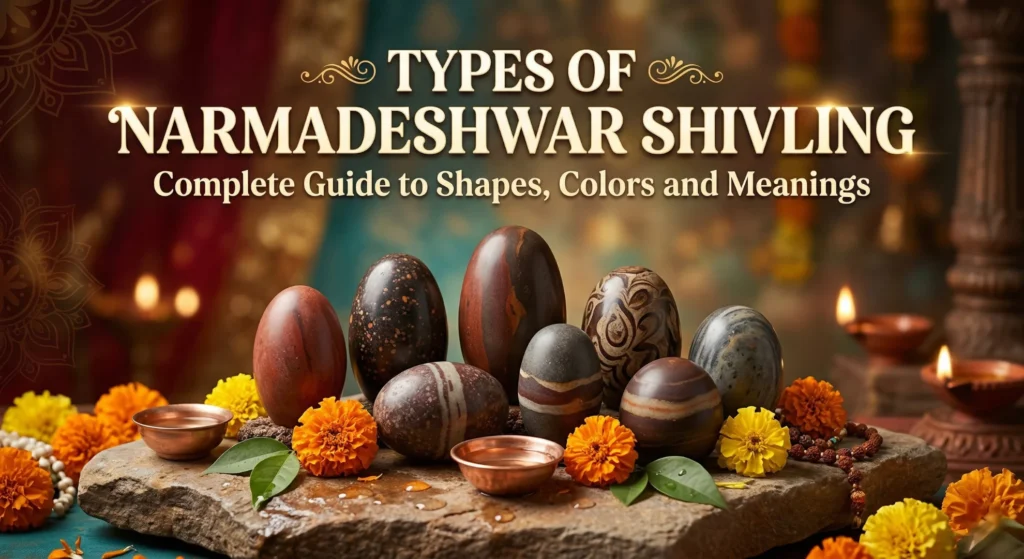
The Narmadeshwar Shivling is one of the most sacred and spiritually significant forms of Lord Shiva worship in Hindu tradition. Unlike artificial idols, these Shivlings are naturally formed in the holy Narmada River over thousands of years through continuous water flow, erosion, and mineral interaction. Because of this natural origin, devotees believe that each Shivling carries unique spiritual vibrations and divine energy.
When exploring the types of Narmadeshwar Shivling, it becomes clear that no two Shivlings are exactly the same. Each one differs in shape, color, texture, and markings. These natural variations are not random; rather, they are often associated with different symbolic meanings and spiritual benefits. Therefore, understanding these types helps devotees choose a Shivling that aligns with their spiritual goals, home environment, and personal preferences.
Moreover, selecting the right Shivling enhances not only daily worship but also meditation, positivity, and overall spiritual growth. You can explore authentic and naturally sourced Shivlings here:
https://shriramaynarmadeshwar.com/
What Defines Types of Narmadeshwar Shivling
The classification of types of Narmadeshwar Shivling is based entirely on natural characteristics rather than human design or craftsmanship. Since these Shivlings form organically in the Narmada River, their features depend on environmental conditions such as water flow, mineral content, and the duration of natural erosion.
Key Factors That Define Types
Several important factors determine the type of Shivling:
- Shape and structural formation
- Natural color variations
- Surface patterns and markings
- Size and symmetry
- Texture and smoothness
Because these factors develop naturally over long periods, each Shivling becomes a unique representation of nature’s craftsmanship. As a result, devotees often feel a deeper connection with a Shivling that resonates with them personally, both visually and spiritually.
Types of Narmadeshwar Shivling Based on Shape
Shape is one of the most noticeable and important aspects when identifying different types of Shivling. It not only affects the appearance but also influences symbolic meaning and usability in worship.
Oval Shaped Shivling
The oval-shaped Shivling is the most common and widely preferred form for both home and temple worship.
Features
- Smooth and symmetrical appearance
- Balanced and stable structure
- Easy placement on Jaladhari
- Comfortable for daily rituals
Meaning
The oval shape represents completeness, harmony, and the infinite nature of Lord Shiva. It symbolizes the cycle of creation and destruction, making it ideal for devotees seeking balance and spiritual stability in life.
Cylindrical Shivling
Some Shivlings appear slightly elongated or cylindrical due to natural shaping in the river.
Features
- Taller and vertically extended form
- Distinct upward structure
- Less common compared to oval shapes
Meaning
This type symbolizes spiritual growth, elevation, and upward movement of energy. Therefore, it is often preferred by those focusing on meditation, personal development, and higher consciousness.
Flat Base Shivling
Certain Shivlings naturally develop a flatter base, which makes them more stable.
Features
- Strong base for placement
- Reduced movement during rituals
- Easy to position in home temples
Meaning
Flat base Shivlings represent grounding, stability, and balance. They are particularly suitable for households seeking peace, security, and emotional stability.
Irregular or Unique Shape Shivling
Some Shivlings form in unusual shapes due to variations in natural conditions.
Features
- Non-uniform structure
- Distinct curves or asymmetry
- Rare and unique appearance
Meaning
These Shivlings symbolize individuality and the diversity of creation. They remind devotees that the divine exists in all forms and variations.
Types of Narmadeshwar Shivling Based on Colors
Color variations in Shivlings occur due to the presence of different minerals and environmental factors in the Narmada River.
Black Shivling
Black is the most common and widely worshipped color.
Meaning
- Represents infinity and cosmic energy
- Associated with strength and protection
- Ideal for regular worship and meditation
Because of its strong symbolic meaning, black Shivlings are often preferred in both homes and temples.
Brown Shivling
Brown Shivlings form due to the presence of earth-based minerals.
Meaning
- Symbolizes grounding and stability
- Promotes emotional balance
- Encourages harmony in relationships
These Shivlings are ideal for maintaining a peaceful home environment.
Grey Shivling
Grey Shivlings have a neutral and subtle appearance.
Meaning
- Represents balance and wisdom
- Enhances clarity of thought
- Supports meditation practices
This type is often chosen by individuals focusing on mental peace and mindfulness.
Multi-Colored Shivling
Some Shivlings display natural combinations of colors and patterns.
Meaning
- Represents unity of different energies
- Symbolizes balance in life
- Encourages harmony and positivity
These Shivlings are valued for both their beauty and symbolic significance.
Types of Narmadeshwar Shivling Based on Patterns
Patterns on the Shivling surface add another layer of uniqueness and meaning.
Striped Shivling
These Shivlings have natural lines or stripes formed over time.
Meaning
They represent continuity, balance, and the flow of life’s energy.
Marked Shivling
Some Shivlings contain natural dots or symbolic markings.
Meaning
These are considered highly auspicious and are often associated with divine blessings.
Smooth Polished Shivling
Certain Shivlings become extremely smooth due to prolonged water erosion.
Meaning
They symbolize purity, clarity, and spiritual refinement, making them ideal for meditation.
How to Choose the Right Type of Narmadeshwar Shivling
Choosing the right Shivling requires thoughtful consideration of multiple factors.
Based on Purpose
- For daily worship: Oval or black Shivling
- For meditation: Smooth or grey Shivling
- For emotional balance: Brown Shivling
- For harmony: Multi-colored Shivling
Based on Space
- Small Shivling for home temple
- Medium Shivling for larger home spaces
- Large Shivling for temples
Based on Authenticity
Always ensure that the Shivling is naturally sourced from the Narmada River. Authenticity guarantees spiritual value and traditional alignment.
You can explore authentic Shivlings here:
https://shriramaynarmadeshwar.com/#product
Importance of Understanding Shivling Types
Understanding the types of Narmadeshwar Shivling allows devotees to make informed decisions. It helps in selecting a Shivling that aligns with personal beliefs, spiritual goals, and practical needs.
Moreover, it enhances appreciation for the natural beauty and uniqueness of each Shivling. This deeper understanding strengthens the overall worship experience and creates a stronger spiritual connection.
Common Misconceptions About Shivling Types
One Type is More Powerful
All Shivlings are sacred. Their effectiveness depends on devotion rather than type.
Only Black Shivling is Ideal
While popular, other colors also carry significant meaning and benefits.
Shape Determines Spiritual Power
Shape influences symbolism, but devotion determines spiritual impact.
Connection with Shivling Meaning and Origin
To understand the deeper meaning and origin of Shivling, you can read:
https://shriramaynarmadeshwar.com/narmadeshwar-shivling-lingam-meaning-origin-and-spiritual-power/
Role of Devotion in Choosing Shivling
While knowledge about types is important, devotion remains the core of worship. A Shivling chosen with faith and sincerity becomes a powerful medium for spiritual growth.
Therefore, instead of focusing only on type, devotees should prioritize connection, belief, and regular worship practices.
FAQs
What are types of Narmadeshwar Shivling?
They are classified based on natural shape, color, and patterns formed in the Narmada River.
Which Shivling type is best for home?
Oval and black Shivlings are commonly preferred for home worship.
Do Shivling colors have meaning?
Yes, each color represents different spiritual qualities such as strength, balance, or peace.
Are all Shivlings equally powerful?
Yes, all Shivlings are sacred. Devotion determines their spiritual impact.
How to identify original Narmadeshwar Shivling?
Look for natural patterns, irregular shapes, and verify its source.
Where can I buy Narmadeshwar Shivling?
You can explore authentic Shivlings here:
https://shriramaynarmadeshwar.com/