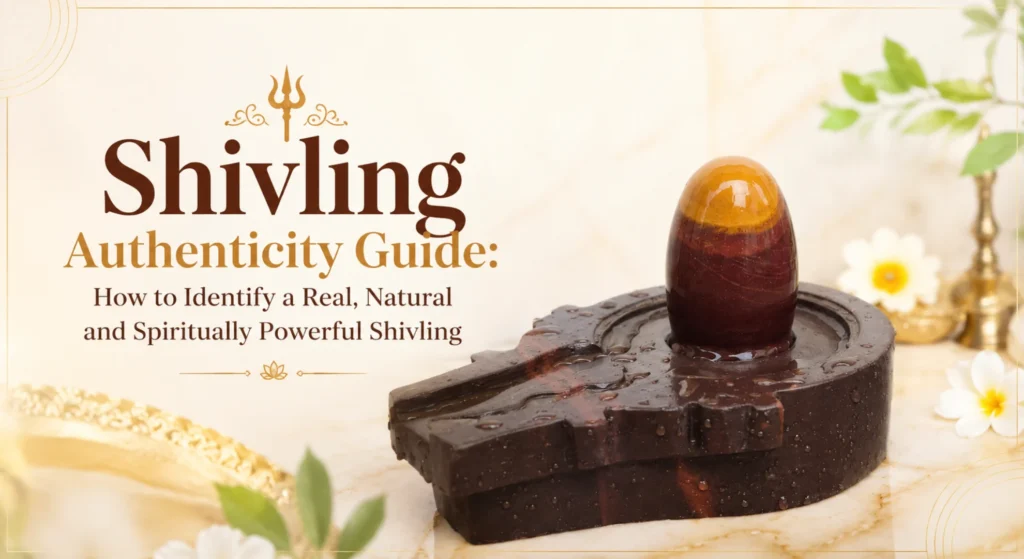
For devotees of Lord Shiva, buying a Shivling is not just a purchase—it is a spiritual decision that often stays with the family for generations. A Shivling becomes the center of worship, meditation, and daily prayer, making its authenticity extremely important. In today’s market, however, many artificial, machine-made, and decorative Shivlings are sold as “original,” which can confuse buyers. This is why having a proper Shivling authenticity guide is important before making a purchase.
A real Shivling, especially one naturally formed in sacred rivers like the Narmada, is highly valued because of its natural origin and spiritual importance. Many devotees believe that naturally formed Shivlings carry stronger spiritual vibrations and are more suitable for worship. Understanding how to identify an authentic Shivling can help you avoid fake products and preserve the purity of your spiritual practices.
This guide will explain the key signs of authenticity, the importance of natural Shivlings, and the steps every buyer should follow.
Why Shivling Authenticity Matters
Authenticity matters because the Shivling is not simply a decorative object. It represents Lord Shiva’s infinite energy, cosmic balance, and spiritual transformation. In ancient traditions, naturally formed Shivlings are often treated with special respect because they are considered closer to divine creation.
When devotees worship an authentic Shivling, they feel more connected to ancient traditions and spiritual discipline. This emotional and spiritual connection often becomes stronger when they know the Shivling is real and naturally formed.
Buying a fake or artificial Shivling may not necessarily stop worship, but for many devotees, authenticity carries traditional and emotional value that makes worship more meaningful.
What Is a Real and Natural Shivling?
A real Shivling usually refers to one that is naturally formed rather than carved artificially. Among the most respected examples are Narmadeshwar Shivlings, which are found in the sacred Narmada River.
These Shivlings are shaped over thousands of years by flowing water, natural minerals, and stone movement. This natural process creates smooth surfaces, unique markings, and balanced shapes without human carving.
Each natural Shivling is unique, which makes it different from factory-made products that often look identical.
At Shri Ramay Narmadeshwar, you can explore authentic natural Shivlings directly:
Website: https://shriramaynarmadeshwar.com/
Collection: https://shriramaynarmadeshwar.com/#product
1. Check the Surface Texture Carefully
One of the first steps in any Shivling authenticity guide is examining the surface. A natural Shivling usually has a smooth but organic texture created by years of natural movement in water.
The surface should feel like natural stone rather than plastic or polished resin. Slight natural unevenness, soft stone grains, and unique touch variations are normal.
Artificial Shivlings often look overly polished and unnaturally perfect.
2. Look for Natural Markings and Stone Lines
A genuine Shivling often carries natural lines, veins, and mineral patterns. These markings form naturally over time and are one of the strongest signs of authenticity.
No two natural Shivlings will have the same exact markings. This uniqueness is one of the reasons devotees value them.
If multiple Shivlings appear identical in texture and pattern, they may have been machine-produced.
3. Verify the Shape
Natural Shivlings often have a balanced oval or elliptical shape, especially Narmadeshwar Shivlings. However, they may not always be perfectly symmetrical.
This is an important point because many buyers wrongly assume that perfect symmetry means authenticity. In reality, slight natural variations often confirm that the Shivling was shaped by nature.
The goal is to observe natural balance, not artificial perfection.
4. Check the Weight
Real stone Shivlings usually feel heavier because natural stone is dense and strong. When held in hand, an authentic Shivling often feels solid and stable.
Artificial materials like resin, plaster, or lightweight molded compounds may look convincing but usually feel lighter.
Weight should be used as one factor along with texture and markings.
5. Observe Natural Color Variations
A common myth is that real Shivlings are always black. This is not true. Natural Shivlings can appear in various shades depending on the mineral composition.
Common natural colors include:
- Black
- Brown
- Grey
- Yellowish tones
- Mixed stone patterns
These color differences are normal and often indicate natural origin.
6. Ask About the Source
A key part of any Shivling authenticity guide is verifying where the Shivling comes from. For Narmadeshwar Shivlings, the source should be the sacred Narmada River.
A trusted seller should be able to explain:
- Source location
- Natural formation details
- Stone type
- Product authenticity
Buying from a specialized store greatly reduces the risk of scams.
7. Avoid Artificial Shine and Paint
A real Shivling usually does not need paint or heavy coatings. Its natural beauty comes from stone texture and natural smoothness.
If a Shivling has peeling paint, bright artificial colors, or glossy chemical coatings, it may not be natural.
A naturally formed Shivling often has a simpler, more grounded appearance.
You can also read:
Common Mistakes Buyers Make
Many people buy based only on price. Some assume cheaper means fake or expensive means authentic, but neither is always true. Price should be considered only after checking authenticity.
Another common mistake is trusting only images. Online photos can be misleading. Always read product descriptions, ask questions, and verify the source.
Some buyers also ignore seller credibility, which is one of the most important factors.
Why Narmadeshwar Shivlings Are Trusted Most
Narmadeshwar Shivlings remain one of the most preferred natural Shivlings because of their strong spiritual connection with the Narmada River. Their natural formation, durability, and traditional importance make them highly respected.
Many devotees choose them for daily worship because they are ideal for regular Abhishek, easy to maintain, and spiritually meaningful.
Their authenticity and natural sacredness make them one of the safest choices for serious devotees.
Choosing the Right Shivling With Faith and Knowledge
Faith is the heart of devotion, but knowledge protects that devotion from confusion. This Shivling authenticity guide is meant to help devotees choose wisely and avoid fake products.
An authentic Shivling becomes a part of your spiritual journey, your home temple, and your family traditions. By understanding the signs of authenticity, you can ensure that your worship remains connected to purity, tradition, and spiritual sincerity.
The right Shivling is not just about appearance—it is about truth, connection, and devotion.
Frequently Asked Questions
How do I identify a real Shivling?
Check for natural texture, unique markings, balanced shape, natural weight, and verified source.
Are Narmadeshwar Shivlings natural?
Yes, Narmadeshwar Shivlings are naturally formed in the sacred Narmada River.
Can a real Shivling have different colors?
Yes, natural Shivlings can have black, brown, grey, or mixed mineral shades.
Does a heavier Shivling mean it is original?
Weight helps, but it should be checked with other authenticity signs.
Can I buy authentic Shivling online?
Yes, but only from trusted specialized sellers who provide clear product details.
Where can I buy a genuine Narmadeshwar Shivling?
You can buy authentic Narmadeshwar Shivlings from trusted spiritual stores specializing in naturally formed Shivlings.