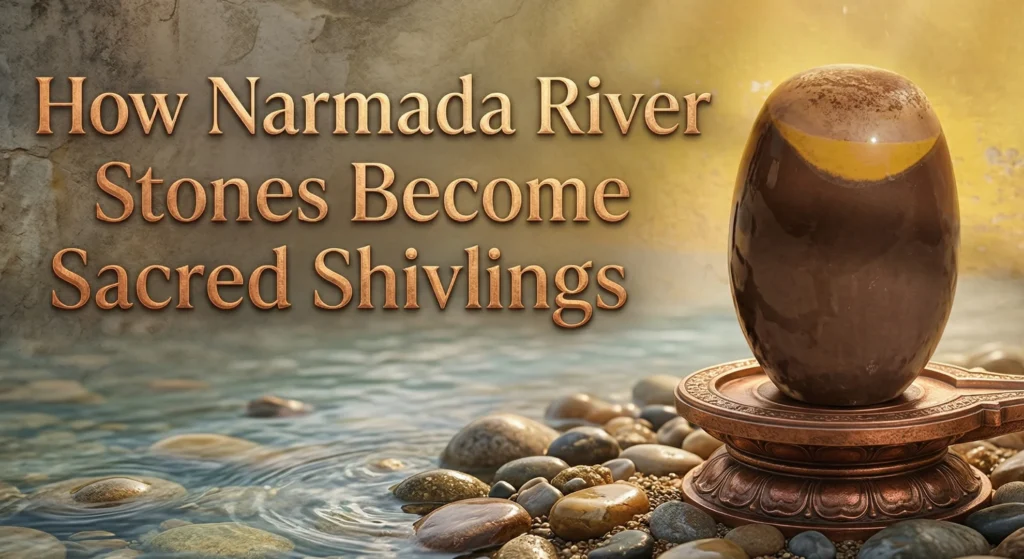
The Narmada river Shivling stone is one of the most fascinating and spiritually significant natural formations in Hindu tradition. Unlike man-made idols that are carved by artisans, these Shivlings are created entirely by nature over thousands of years. This unique formation process, combined with deep-rooted spiritual beliefs, makes them highly sacred among devotees of Lord Shiva.
When people first hear about these stones, they often wonder how ordinary rocks can transform into sacred Shivlings. However, the answer lies in a powerful combination of natural geological processes and ancient spiritual understanding. Over time, continuous water flow, friction, and mineral interaction shape these stones into smooth, symmetrical forms that resemble the Shivling, which is the symbolic representation of Lord Shiva.
Moreover, the fact that these Shivlings are not touched or shaped by human hands adds to their authenticity and spiritual purity. As a result, devotees believe that these naturally formed Shivlings carry divine energy and can bring peace, balance, and positivity into their lives.
You can explore authentic Narmadeshwar Shivlings here:
https://shriramaynarmadeshwar.com/
Sacred Importance of Narmada River
The Narmada River is not just a geographical water body; rather, it holds immense spiritual importance in Hindu culture and tradition. It is often regarded as one of the most sacred rivers in India, comparable to the Ganga and Yamuna, but with its own unique significance.
Spiritual Significance
According to ancient beliefs, the Narmada River is directly associated with Lord Shiva. Many scriptures describe it as a river that carries divine energy, and it is believed that even a single दर्शन of the river can purify the soul. Therefore, stones found in this river are not considered ordinary—they are seen as sacred manifestations of Shiva’s presence.
Cultural and Religious Importance
For centuries, pilgrims and devotees have visited the banks of the Narmada River to collect stones for worship. Unlike other rivers where idols are crafted manually, the Narmada River offers naturally formed Shivlings. This tradition has continued for generations, making the narmada river shivling stone an essential part of Hindu spiritual practices.
What is a Narmada River Shivling Stone
A Narmada river Shivling stone is a naturally formed stone that closely resembles the shape of a Shivling without any human intervention. These stones are also commonly known as Narmadeshwar Shivlings and are widely used in both home temples and large temples.
Key Characteristics
These Shivlings possess several unique features that distinguish them from artificial ones:
- Smooth and naturally polished surface due to constant water flow
- Oval or cylindrical shape resembling traditional Shivling structure
- Natural color variations such as black, brown, or grey
- Unique patterns and textures formed by mineral deposits
Because each stone forms under different environmental conditions, every Shivling is unique. This uniqueness adds to its spiritual value and makes it special for the devotee who worships it.
Natural Formation Process of Shivling Stones
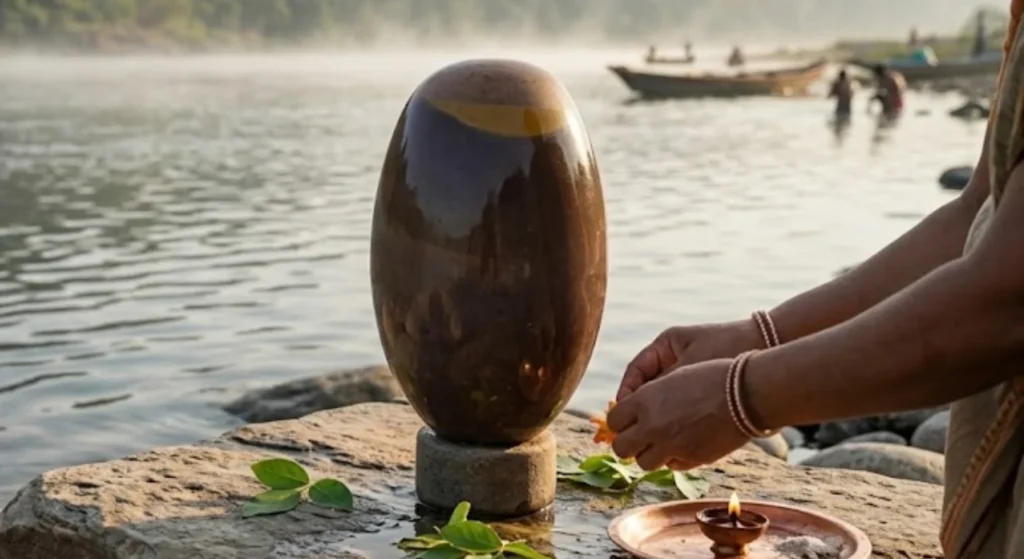
The formation of a narmada river shivling stone is a gradual and complex natural process that takes place over thousands of years. It involves several environmental factors working together to shape the stones into their final form.
Continuous Water Flow
The Narmada River flows with significant force across rocky terrain. As the water moves, it carries stones along the riverbed. This constant movement plays a crucial role in shaping the stones.
Natural Erosion
As stones collide with each other due to water flow, their rough edges begin to wear away. Over time, this erosion smoothens the surface and gradually removes irregularities.
Rolling and Rotation
The stones continuously roll and rotate in the river current. This movement ensures that all sides of the stone are equally shaped, resulting in a balanced and symmetrical form.
Mineral Composition
The presence of minerals in the river contributes to the hardness and durability of the stones. These minerals also influence the color and texture of the Shivlings, giving each one a distinct appearance.
Because of this long and natural process, the stones eventually take on the perfect oval or cylindrical shape that resembles a Shivling.
Why These Stones Naturally Resemble Shivling
One of the most intriguing aspects of the narmada river shivling stone is how naturally it resembles the traditional Shivling form.
Natural Symmetry
The continuous rolling motion in water creates a balanced shape that appears symmetrical from all angles. This symmetry is similar to the traditional Shivling design used in temples.
Oval Formation
The constant friction and rotation lead to an oval or elliptical shape, which closely matches the symbolic representation of Shiva.
Smooth Surface
The polishing effect of water and friction gives the stone a smooth and refined surface without any artificial finishing.
Because of these natural characteristics, these stones are easily recognized as Shivlings and are considered suitable for direct worship.
Spiritual Belief Behind Narmada Shivling
While the scientific explanation explains the formation, the spiritual belief adds deeper meaning to these stones.
Self-Manifested (Swayambhu) Form
Devotees believe that these Shivlings are self-manifested, meaning they are created by divine forces rather than human effort. This belief makes them highly sacred.
Presence of Divine Energy
Since the Narmada River is associated with Lord Shiva, the stones formed within it are believed to carry his energy. Therefore, worshipping these Shivlings is seen as directly connecting with Shiva.
No Need for Consecration
Unlike artificial idols that require rituals to become sacred, Narmadeshwar Shivlings are considered inherently divine and ready for worship.
Why Narmadeshwar Shivling is Highly Sacred
The Narmadeshwar Shivling stands out among all Shivlings due to its natural origin and spiritual importance.
Natural Purity
Since these Shivlings are not carved or altered, they are considered pure and authentic.
Strong Traditional Value
Many temples prefer Narmadeshwar Shivlings because they align with traditional beliefs and practices.
Long-Lasting Nature
These stones are extremely durable and can be used for generations without losing their form or significance.
You can explore authentic Shivlings here:
https://shriramaynarmadeshwar.com/#product
How These Shivlings Are Collected
The process of collecting Shivling stones is done carefully to preserve their natural form and spiritual value.
Collection Process
- Stones are collected from riverbanks or shallow areas
- Only naturally shaped Shivlings are selected
- No artificial shaping or polishing is done
Sorting and Selection
After collection, the stones are sorted based on size, shape, and quality. Only the best pieces are chosen for worship and sale.
Importance of Natural Shivling Over Artificial Ones
Natural Shivlings are preferred because they offer authenticity and deeper spiritual connection.
Authentic Origin
They are formed naturally, which makes them spiritually pure.
Unique Identity
Each Shivling is different, adding personal significance for the devotee.
Traditional Acceptance
They have been used in worship for centuries and are widely respected.
For more insights, you can read:
https://shriramaynarmadeshwar.com/ardhnareshwar-narmadeshwar-shivling-symbol-of-shiva-and-shakti-unity/
Role of Devotion in Worship
While the origin and formation of the Shivling are important, devotion remains the most powerful element in worship. A Shivling becomes truly meaningful when it is worshipped with sincerity, discipline, and faith.
Modern Relevance of Narmada Shivling
Even in modern times, the narmada river shivling stone continues to hold great importance.
- Used in home temples
- Helps in meditation and focus
- Promotes peace and positivity
- Supports spiritual growth
As people seek natural and meaningful spiritual practices, these Shivlings remain highly relevant.
FAQs
What is Narmada river Shivling stone?
It is a naturally formed stone from the Narmada River that resembles a Shivling.
How does Shivling form in Narmada River?
It forms through continuous water flow, erosion, and friction over thousands of years.
Why are Narmada stones sacred?
Because the river is associated with Lord Shiva and the stones form naturally.
Can we worship these stones directly?
Yes, they are considered self-manifested and suitable for worship.
Are Narmadeshwar Shivlings natural?
Yes, they are completely natural and not man-made.